SEO is a product, not a plugin
It is tempting to put search in a box marked ‘later’. Finish the website, install a tool, fill in a few fields and move on. We prefer to treat search as part of the product: the structure, the content and the experience someone finds when they arrive.
Start with real customer language
The words a business uses internally are not always the words its customers use. We collect the questions that appear in calls, enquiries and everyday conversations. What do people ask for? What do they need explained? Which details change their decision? This is useful material for both the website and the service itself.
We then group related questions around a clear topic. A page about a specific service should explain that service well, rather than trying to cover every possible subject. A visitor should be able to recognise the topic from the heading and find a useful answer in the body of the page.
The point is not to squeeze the same phrase into every sentence. It is to make the page specific. Real examples, practical explanations and a clear offer are more helpful than a paragraph that could belong to any company.
Consider a customer choosing a local supplier. They may need to know which areas are covered, which materials are available and how a visit is arranged. Answering those questions creates a useful page because it reflects a real decision, rather than a list of terms chosen in isolation.
Build the structure before the polish
We map the important pages before designing them. Each page needs a purpose, and the connections between pages should make sense to a visitor. A service page can point to a relevant project. A project can explain the work and lead back to the service behind it. The navigation should reflect the business people are trying to understand.
This work also reveals gaps. Sometimes the missing piece is not another landing page. It is a useful explanation, a clearer service boundary or a case study that shows how the business solves a particular problem. We would rather identify that early than add a collection of thin pages after launch.
A sensible structure gives content somewhere to live. It makes future updates easier because the team knows which page owns which topic and where a new example belongs.
We also read the links as part of the explanation. A visitor should know why a project is relevant before opening it, and understand what another page will add. Clear link wording helps the journey feel connected, especially when someone arrives directly on a page deeper in the site.
- Give each page one clear topic and a useful answer.
- Connect services to the projects that demonstrate them.
- Use the language customers already use.
- Keep improving the content after launch.
Make the arrival feel right
Finding a page is only the beginning of the experience. The promise made before the visit should match what is on the page. If someone comes looking for a particular service, that service should be obvious. If they want practical information, they should not need to work through a long brand introduction first.
We review the site on real screen sizes with the actual content in place. We look for unreadable text, distracting movement, confusing links and unnecessary steps. These are product questions as much as search questions. A page is useful when it helps someone do what they came to do.
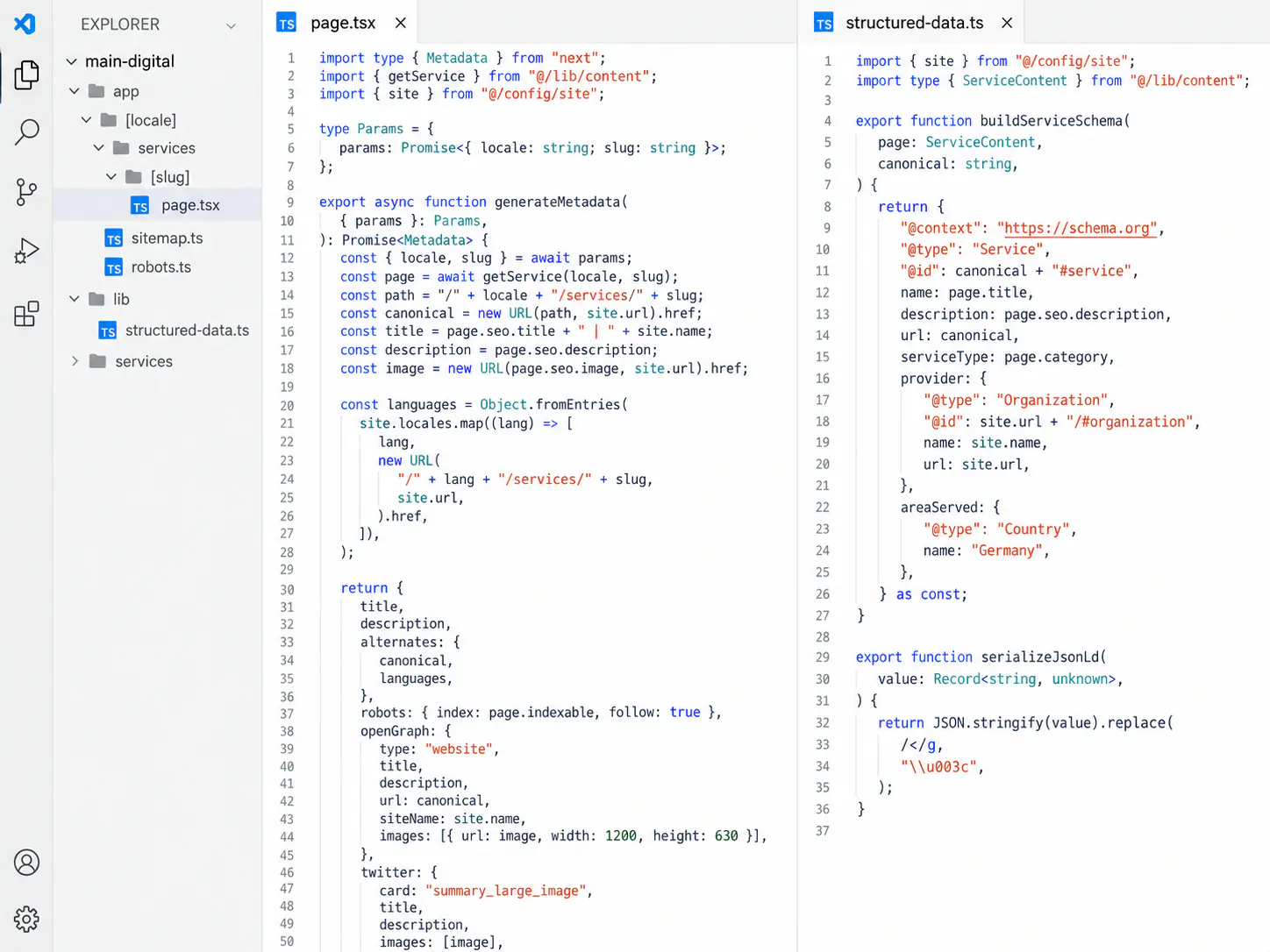
Technical checks matter too, but a checklist cannot replace a clear page. We make room for both: a sound implementation and content that deserves to be there.
One useful review starts with the question that brought someone to the page. We read the opening, look for the answer and follow the next action without relying on knowledge of the company. Any point that requires an explanation from the team is a chance to make the page clearer.
Keep improving the product
A website changes as the business changes. New services, new questions and new projects all create opportunities to make the content more useful. We prefer a regular review of the important pages to a single burst of writing followed by months of silence.
The same principle applies to reporting. A chart is useful when it helps decide what to do next. We ask which pages support the business, which questions remain unanswered and which visits lead to relevant conversations. There is no single number that tells the entire story.
Thinking of SEO as a product keeps the work grounded. The task is to build and maintain something worth finding, then keep making it better for the people who find it.
A named owner makes that work easier to sustain. Someone should know when a service changes, when a project becomes a useful example and when an answer is no longer accurate. Those small updates keep the website connected to the business it represents.